Wednesday, September 24, 2014

10 habits to strengthen your relationship with your child

10 Habits to Strengthen Your Relationship with Your Child

"We need 4 hugs a day for survival.  We need 8 hugs a day for maintenance. We need 12 hugs a day for growth." -- Virginia Satir

We all crave those close moments with our children that make our hearts melt. Connection is as essential to us parents as it is to our children. When our relationship is strong, it's also sweet -- so we receive as much as we give. That's what makes parenting worth all the blood, sweat and tears.

That connection is also the only reason children willingly follow our rules. Kids who feel strongly connected to their parents WANT to cooperate. They trust us to know what's best for them, to be on their side. I hear regularly from parents that everything changes once they focus on connecting, not just correcting.
But we're only human.  There are days when all we can do is meet our children's most basic needs:  Feed them, bathe them, keep an encouraging tone, hug them, and get them to sleep at a reasonable hour so we can do it all over again tomorrow. Given that parenting is the toughest job on earth -- and we often do it in our spare time, after we work at another job all day -- the only way to keep a strong bond with our children is to build in daily habits of connection. What kinds of habits?
1. Aim for 12 hugs (or physical connections) every day. Hug your child first thing in the morning, when you say goodbye, when you're re-united, at bedtime, and often in between.  If your tween or teen rebuffs your advances when she first walks in the door, realize that with older kids you have to ease into the connection.  Get her settled with a cool drink, and chat as you give a foot rub. (Seem like going above and beyond?  It's a foolproof way to hear what happened in her life today. You'll find yourself glad, many times, if you have that high on your priority list.)
2. Connect before transitions. Kids have a hard time transitioning from one thing to another.  If you look her in the eye, use her name, and play a bit to get her giggling, you'll fill her cup and make sure she has the inner resources to manage herself through a transition.  Mornings go much easier when you start with a five minute snuggle upon awakening to help your child transition from sleep into the executive functions of dressing and teeth brushing.
3. Play.  Laughter and rough-housing keep you connected with your child by stimulating endorphins and oxytocin in both of you.  Making playfulness a daily habit also gives your child a chance to work through the anxieties and upsets that otherwise make him feel disconnected -- and more likely to act out. And play helps kids want to cooperate.  Which is likely to work better,  "Little Gorilla, it's time for breakfast, come eat your  bugs and bananas!" and "Don't you think your steam shovel wants to get in the car now so he can see the construction site on the way to the store?" or "Eat your breakfast now!" and "Get in the car!"
4. Turn off technology when you interact with your child.  Really. Your child will remember for the rest of his life that he was important enough to his parents that they turned off phones and music to listen to him.  This is particularly important in the car, because the lack of eye contact in a car takes the pressure off, so kids (and adults) are more likely to open up and share.

5. Special time. Every day, 15 minutes with each child, separately.  Alternate doing what your child wants and doing what you want.  On her days, just pour your love into her and let her direct.  On your days resist the urge to structure the time with activities.  Instead, play  therapeutic "games" to help your child with whatever issues are "up" for her. (For game ideas, click here.) 
6. Welcome emotion. Sure, it's inconvenient.  But your child needs to express his emotions or they'll drive his behavior.  So accept the meltdowns, don't let the anger trigger you, and welcome the tears and fears that always hide behind the anger. Remember that you're the one he trusts enough to cry with, and breathe your way through it.  Afterwards, he'll feel more relaxed, cooperative, and closer to you. (Yes, this is really, really hard. Regulating our own emotions is the hardest part of parenting. But that doesn't mean we're excused from trying.)
7. Listen, and Empathize. Connection starts with listening.  Bite your tongue if you need to, except to say "Wow!....I see....Really?...How was that for you?"  The habit of seeing things from your child's perspective will ensure that you treat her with respect and look for win/win solutions.  It will help you see the reasons for behavior that would otherwise drive you crazy. And it will help you regulate your own emotions so when your buttons get pushed and you find yourself in "fight or flight," your child doesn't look so much like the enemy.
8. Slow down and savor the moment. Share the moment with your child: let him smell the strawberrries before you put them in the smoothie.  Put your hands in the running water together and share the cool rush of the water. Smell his hair. Listen to his laughter. Look him in the eyes. Connect in the magnificence of the present moment. Which is really the only way we can connect.
9. Bedtime snuggle and chat. Set your child's bedtime a wee bit earlier with the assumption that you'll spend some time visiting and snuggling in the dark. Those companionable, safe moments of connection invite whatever your child is currently grappling with to the surface, whether it's something that happened at school, the way you snapped at her this morning, or her worries about tomorrow's field trip. Do you have to resolve her problem right then? No. Just listen. Acknowledge feelings. Reassure your child that you hear her concern, and that together you'll solve it, tomorrow. The next day, be sure to follow up. You'll be amazed how your relationship with your child deepens. And don't give this habit up as your child gets older. Late at night is often the only time teens will open up.
10. Show up.  Most of us go through life half-present. But your child has only about 900 weeks of childhood with you before he leaves your home.  He'll be gone before you know it.  Try this as a practice:  When you're engaged with your child, just be right here, right now.  You won't be able to do it all the time.  But if you do it every day for a bit, you'll find yourself doing it more and more. Because you'll find it creates those moments with your child that make your heart melt.


Parents' Last Call for Senior Year

The Parent's 'Last Call' List for Senior Year

Posted: Updated:
2014-09-22-Campus.BenchandPath1024x715.jpeg
1. Pay a professional photographer.
Try for that one perfect set of family pictures that no amateur can capture. It seems like the kids are grown, that the need to document their gorgeous faces has lost its urgency as the transitions slow. Wrong. That just-finished-childhood-not-quite-adult look is fleeting. Get someone who knows what they are doing to capture it.
2. Talk about failure and tell them of your failings.
Tell them why you failed and how you recovered and how, for some period of time, you thought you might not.  We loom so large in our children's lives as the people who once held superpowers. Let them know how those powers have often failed you as both an adult and a parent.
3. Buy them one beautiful thing.
This moment, these last days, are worthy of commemorating and do not let them slip by unmarked. Jewelry and watches are traditional choices for senior year, but beauty and meaning, not expense, are the salient factors in this purchase.
4. Tell them secrets.
Disclose what they just might not know, things about your life that you, perhaps, glossed over, but now realize that they are old enough to understand. You will be letting them know that things are not always as they seem, and that they are a trusted near-adult confident, worthy of sharing family secrets. Talk to them like the adult that they will soon be; it will fill them with the confidence to get there.
5. Let them go before they are gone.
I kept my kids on an insanely tight leash senior year. I monitored their every movement and made them check in constantly. In short, I drove them crazy. And then I didn't. Once they were on the downslope of senior year, once everything they could do for college admission had been done, I let them take some victory laps, the well-deserved privilege of senior year. They broke curfews, went out on a few school nights and had a taste of freedom to come.
6. Have those painful talks.
Sit down and have the discussion, the one you will wish you had had if, God forbid, anything ever goes wrong. Sure, you can tell them where the wills are and how you hope to see your possessions disbursed. But this is not that talk. This is the talk where you recognize that you are speaking to a near-adult and you tell them why you love their other parent, what makes a good marriage, how shocking it was to find yourself a parent and yet how marvelous, what kind of wife/mother husband/father you hope they will one day be. It will feel sad, and poignant, but while you are still in that day-to-day high school routine, take a step back and talk about the really big things in life.
7. And just for a minute, grab them tight and hold them close.
Give them the morning hug that had slipped out of your routine and the kiss on the forehead that was, for years, a nightly ritual. Sit by their bed with a hand on theirs because this is the time to try and capture that feeling forever. This is the moment for that final squeeze, the brief moment when we clench them even tighter, hold them close enough to take our breath away and then let them go.
This post originally appeared on Grown and Flown. Find us on Facebook or subscribe here.

Tuesday, August 19, 2014

Protecting sibling relationships

A Relationship Worth Protecting

relationship HFM
“Can you see your love for me shining through? Cuz what you see in me, I can see in you. And soon enough, you and me we’ll be out of time. And kindness will be all we can leave behind.”

- Nimo Patel My younger daughter rushed upstairs, her face wet with tears. She said she was having trouble putting together a Lego structure and couldn’t figure out what to do. When she asked her big sister for help, she cut her down—her words sharp and pointed and straight into the heart.
Yes, it had been a long summer. When you move to a new state, your sibling becomes your full-time playmate. My children had been in the company of one another for two solid months, no reprieves. But I’ve noticed that as my older daughter becomes more tween and less child, her patience is thinner … her sass stronger … her tone edgier. And there’s something about her little sister’s laid-back, leisurely nature that pushes her buttons. But something needed to be said before irreparable damage was done.
I went downstairs to talk privately with my older child. She was aptly securing the final pieces to an impressive Lego tree house. Pushing stray pieces aside, I sat down next to her. “I have something to tell you,” I said my voice low and serious. My daughter knew to stop fiddling and look into my eyes. “Whether you like it or not, you are shaping your little sister’s self-esteem. The way she feels about herself will largely come from how you treat her. In fact, your opinion of her may be even more important than mine.”
I paused to let my daughter absorb this information. When I continued talking, I surprised myself by divulging something I hadn’t fully appreciated until that moment. “Do you know why I know the impact your opinion has on your sister’s life?” My daughter shook her head. “Because I was the little sister. Yes, my sister and I fought over clothes, music, whose turn it was to feed the cat, the bathroom, and other silly things, but never once did my sister shame me or put me down. Not once. Just imagine what that gift did for me.”
By now I was crying. Surprisingly my daughter wasn’t looking at me strangely or searching for the nearest exit. With a mixture of interest and sadness, my daughter looked like maybe what I had to say was something worth listening to. I swallowed hard, attempting to regain control over my unexpected emotional breakdown. “We all need someone in our corner, to have our back, to believe in us when we don’t believe in ourselves. If you haven’t noticed, your little sister looks at you like a hero. And when you criticize or belittle, it hurts. But when you compliment or encourage her, she soars.”
Later, as I later replayed the conversation back in my head, I was reminded of the most important “rule” I had in my classroom when I was a teacher. I informed my students that our classroom was a safe haven. While I fully expected there to be squabbles and disagreements between children, there would be no hurtful attacks on physical appearance, intelligence, or abilities. I realize now that this is how I feel about my home. I expect my children to treat each other respectfully and kindly, no exceptions. To some this might sound like a ridiculous aspiration, head-in-the-clouds kind of thinking. “Siblings are supposed to knock each other down and toughen each other up,” I can just hear the naysayers say. I might have agreed with that statement had it not been for my sister showing me what happens when a family member believes in you despite knowing your every weakness and fault.
You see, in grade school I was a mess. I had a bad bowl cut. Too many freckles covered my nose. I wore the same awful navy blue sweater every single day until it practically disintegrated. My hair held the unbecoming shine of ultra quick showers minus the shampoo. I had the worst smelling feet. I gained a lot of weight the summer before middle school and got stretch marks. I was ashamed. While my parents worked, my sister took me to the neighborhood pool. She never said a word about my body. She only said, “I love your bathing suit.” I remember. It meant everything that she chose to look beyond the unsightly marks.
In high school my sister would wave me over as I walked down the halls. She would introduce her awkward freshman sister to her senior high friends. She was proud of who I was. She believed in me. My sister never told me I was not capable even if she thought there was no way I could make the volleyball team or move up a chair in orchestra. As an adult, my sister showed me the same support. Knowing how much I loved to write, she was adamant that I should start a blog. I said I didn’t know how. She sent me a book telling me how. She said she would help. My sister kept saying I should and I could until I finally tried. I would not be a published author today had it not been for the unconditional love and encouragement I received from my sister. My life would have turned out very differently if my sister had routinely tore me down rather than continually build me up.
My greatest hope is that my children encourage each other this way. I cannot force it to happen, but I can model it. Because honestly, talking to my older daughter about how I expect her to treat her sister has shined a slightly uncomfortable spotlight onto my own words and actions. The truth is, the way I treat my older daughter will reflect how she treats her younger sister. Just as she is shaping her little sister’s self-esteem through words and actions, I am shaping hers.
Just as I told her to think about the voice she is using with her sister—is it kind? Is it impatient? Is it encouraging? I must consider my tone too.
Just as I told her to think about the messages she is giving—You matter. You’re smart. I believe in you. I must think about my words too.
Just as I told her if you don’t like her wearing grubby t-shirts every day, compliment her when she wears something you do like. I am trying to practice that too.
Just as I told her to notice when her sister is stressed out or struggling and to say, “how can I help?” instead of “just deal with it.” I must remember this too.
Those are things my big sister did for me. Not perfectly. But consistently. And it made a life-changing difference.
Last week my daughters began riding the bus at our new school. It was the first time they’ve ever been “bus riders” since our old neighborhood didn’t have school buses. On the second night of school I heard the girls talking in the basement.
“When the teacher says walk to the bus, you need to go as fast as you can, okay? I was worried you were going to miss it. I kept praying you were coming. Walk real fast tomorrow. I know you can do it,” said the big one.
“Okay, I will,” promised the little one. “Thanks for letting nothing bad happen to me.”
“I won’t,” said her protector.
relationship HFM
We all need someone in our corner … to have our back … to believe in us when we don’t believe in ourselves. We can do that, my friends. We can do that for our sisters … our brothers … our children … and for each other. We can do that for the people who are learning how to treat others by watching us live.
I leave you with my own personal pledge so I can build up, not tear down … so I can be a role model, not a bad example … so I can leave a legacy, not a scar. These are my hopes for anyone who spends time in my presence.
The Presence Pledge
I hope you feel like a welcomed spark to my life, not an inconvenience, annoyance, or bother to my day.
I hope you feel comfortable in your skin, not constantly wondering how many things you need to change before you’re loved and celebrated.
I hope you feel heard, valued, and understood, not dismissed for being too young or too inexperienced have an opinion or know what you need to thrive.
I hope you feel capable and confident, not incapable of doing something without constant supervision and correction.
I hope you feel brave to bare the colors of your soul, not pressured to hide your light or play small to gain acceptance.
I hope after spending an hour … a day … a lifetime in my presence,
I leave your heart fuller,
your smile wider,
your spirit stronger
your future brighter
than you could have ever imagined by yourself.

Wednesday, June 4, 2014

  • "At our last doctor's appointment, my pediatrician asked me about gun storage. And I haven't stopped thinking about it since."
  • "I feel really weird asking this, and maybe you'll think I'm totally neurotic, but..."
  • "I want you to know that I've spoken to my kids about not playing with guns. Is this an issue that you've thought about?"
  • "All of us in the PTA (or in our church group or some such) have committed to making sure our children are safe. So I've gotten in the habit of asking everyone..."
  • "My child is so curious and gets into everything. I worry what would happen if he came across a gun."
  • "Did you see that newspaper article about the boy who found his father's hidden gun?"
  • "I had no idea until recently that about 35 percent of households with children have a gun. So I've started asking other parents before Henry plays at their home."


'It's not a judgment on you, but I have a very active little boy who's really curious and into everything. I just don't feel comfortable with him playing in a place where there are guns. Let's set up a playdate at my place.'"

‘I’m very worried about mentioning this, because I don’t want to be divisive, but as a mother, my instincts run deeper. And so I really do need to ask if you have any firearms in your home.’”
And my fear of offending someone? “You could say, ‘I really look forward to a friendship with you, and my child is looking forward to a friendship with you that’s ongoing — it’s just this is something very important to me, and something I want to address early on.’”


Thursday, May 8, 2014

Love letters

Leaving Little Love Letters

mother's love notes,
Image: Ebineyland
My mother regularly wrote little love letters to her children.  They started appearing on our pillows when we could first read, at least one every month or so. Sometimes her notes would reference something we did or said but mostly they simply gushed with affirmation. Her standard ran along the lines of, “You are the nicest, most wonderful seven-year-old in the whole world.”
Her one or two sentence notes were usually written on a scrap of paper. My mother made “scratch” paper out of junk mail and school fliers. She tore paper on the fold lines, getting three pieces out of a standard letter-sized sheet. This made the flip side of her little love letters unintentionally quirky, with references to bank policy or reminders about choir practice. My brother and sister got their own notes but we never mentioned them to each other. They were a private and cherished connection between mother and child.
By the time I was nine or ten years old I wrote little love letters to her too, hiding my notes in her shoe or tucked into her jewelry box. It was easy to tell when she’d found one. She’d dole out a big hug and whisper a line I’d written back to me.  It seems these notes meant as much to her as they did to me. After she died I ran across some of them stuffed into her favorite cookbook, effusive words penciled in my best handwriting.
I know all too well that family life sometimes scrapes us like sandpaper against those closest to us. We don’t talk enough about what amuses or delights us because we’re busy saying that the towels aren’t hung up, shoes are blocking the door, and food is left out on the counter. We may also be dealing with doubts kindled by worry and annoyances that can spark into anger.
Sure, we linger over tender moments that we wish could last forever. We praise the effort (as all those relationship experts tell us to do). But there’s something special when we take the time to write down our very best feelings for one another.  A note is a tangible expression unlike any other.
I won’t kid myself that I’ll ever write as many tiny love letters as my mother wrote in her life. But today I’ll be writing a few sentences to my loved ones and hiding those notes where they’ll find them. I know there’s a sense of completion when we say what’s in our hearts.

Secrets to our most magical kids' parties

Secrets To Our Most Magical Kids’ Parties

Over the past twenty-one years, my husband and I have thrown dozens of kid parties for our three children. While a few of these celebrations were just okay, the majority were memorable. Some were even magical. Here are the important lessons we’ve learned along the way:
It’s all about involvement
I can totally understand the desire to throw a big bash and invite every adult friend in our address book to celebrate a child’s first birthday. The accomplishments of the first year of parenting are certainly worth celebrating!  Generally, however, I appreciate parties geared toward creating a meaningful experience for the child. I’ve found the surest way to do that is to let children take the reins as much as possible by inviting their active participation in every aspect of the event, beginning in the planning stages. Who knows our child better than she does?
This let-the-kids-do-it-whenever-possible approach is reflective of child specialist Magda Gerber’s approach to children’s play, and creative projects (and just about anything else children are involved in). Gerber suggested we trust children to be the writers, directors and lead actors of their play in order to maximize these opportunities for self-motivated learning, problem solving and creative expression. So the party hats we wear are those of a support staff: assistant producer, set designer, go-fer. We let our children do the rest (to the extent of their abilities and interests).
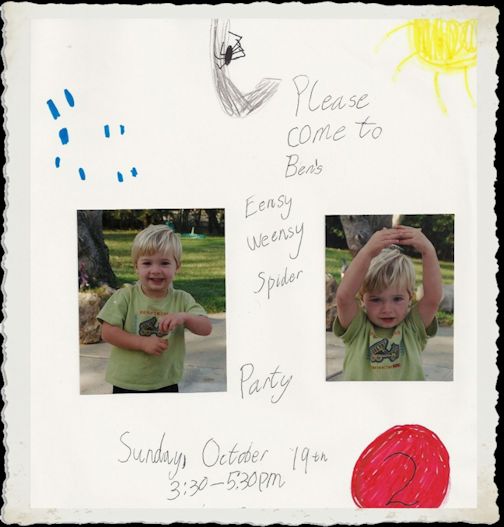
Naturally, the younger the child, the more she’ll need us to do, but we can keep the festivities child-centered by considering her interestsand planning around them. For example, the theme for our son’s second birthday (with his stamp of approval) was one of his favorite songs, “Eensy, Weensy Spider”. He posed for the invitation, which was co-designed by his six-year old sister, and then picked out a few inexpensive spider-themed party favors from a catalogue. We invited family and a couple of his buddies, ate cake, and a spidery good time was had by all.
anotherust right eensy-weensy-spider-979x1024
On the practical side, kids seem to innately understand that less is more, so trusting their instincts has saved us time and loads of money. We’ve noticed that our kids seem to know who to invite and how to keep plans age-appropriate and far simpler than we might have. A case in point:
Parents can get carried away and take over at the drop of a (party) hat
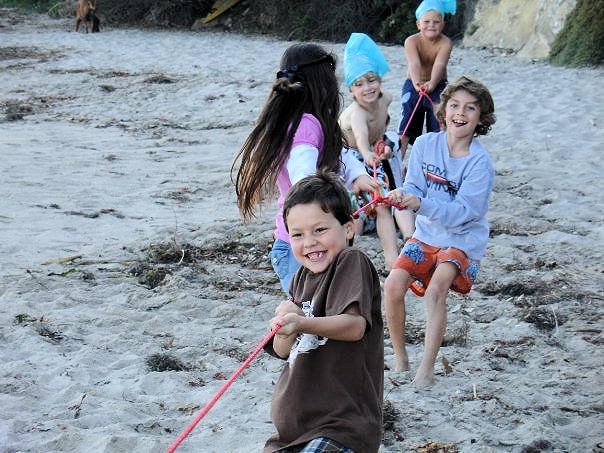
Even though my husband and I always intended to keep plans simple and child-centered, our enthusiasm occasionally got the better of us. My most vivid memory of this was our son’s 7th birthday party. He wanted it to be at the beach near our home, and so we decided on a pirate theme. Our son loved pirates. Well, mostly he loved swords.
My husband and I dug right in, creating an elaborate beach treasure hunt with a map to the pirate’s buried treasure. Neither of us are particularly crafty, but get us started imagining stories and surprises, and we’re off. Some of our brilliant ideas had us rolling on the floor. We were quite pleased with ourselves.
So, as the young pirates set off down the beach in search of the buried treasure chest filled with candy and toys, they had to follow the map, guess clues and solve puzzles. There were twists, turns, dead-ends, and hilarious (we thought) highlights, like one involving the grave of the legendary pirate Ol’ Gasbard and a hidden remote controlled fart machine. (Really.) My husband and I were amused, the children not so much.
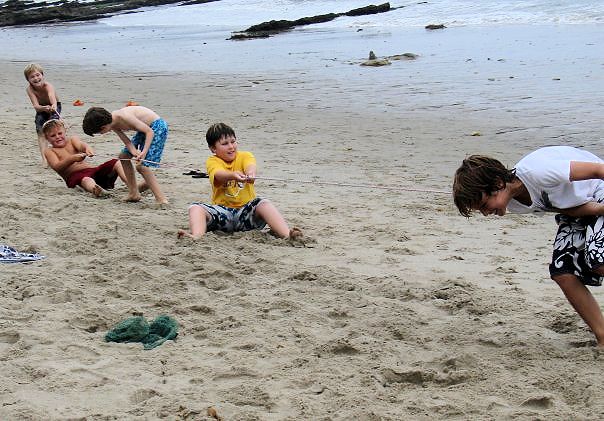
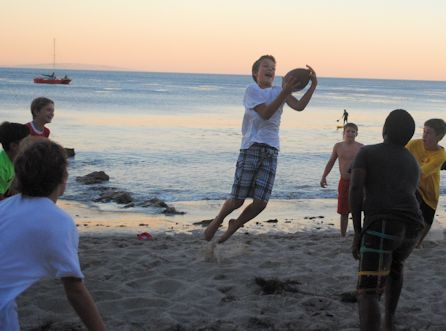
As an afterthought, we’d also followed our son’s suggestion to bring a football and a rope for tug-of-war.
bigger tug of war ben is 7
Guess which activities the kids enjoyed most?
What do you suppose our son said the next year when he requested another beach party?
“Let’s not do the treasure hunt pirate stuff this time.” Um, okay… We didn’t argue. It was actually a relief not to have go to all that trouble again, and I’m (almost) certain we would have eventually come to the same conclusion ourselves. tug of war ben is 8yeeha ben's party
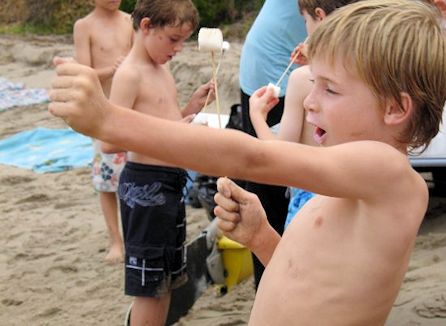
For the next five years our son had the most fabulously rich and shockingly simple beach birthday parties that his buddies raved about and looked forward to every year.
Preparation — at least half the fun
For children, the preparations are as exciting and enriching as the party itself. Child-centered planning and preparation also help toddlers and preschoolers feel on top of the situation, fully informed rather than overwhelmed, so birthday child meltdowns are far less likely.
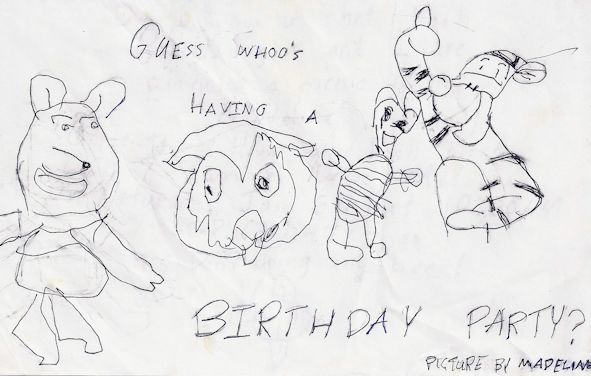
The more open we’ve been to our children’s “less is enough” (and, often, more) approach, the more magical surprises there have been, like the personalized invitation drawings our daughter M made for her fourth birthday. Her eight year old sister did with the writing.
croppedsmaller winnie the pooh0001
Her Winnie the Pooh party, which she chose based on her love of the stories, reminds me of the book I adored and used for three hugely successful affairs: The Disney Party Handbook by Alison Boteler. I checked out the same slightly worn copy from the library each year for our Winnie the Pooh, Beauty and Beast and Peter Pan parties. 
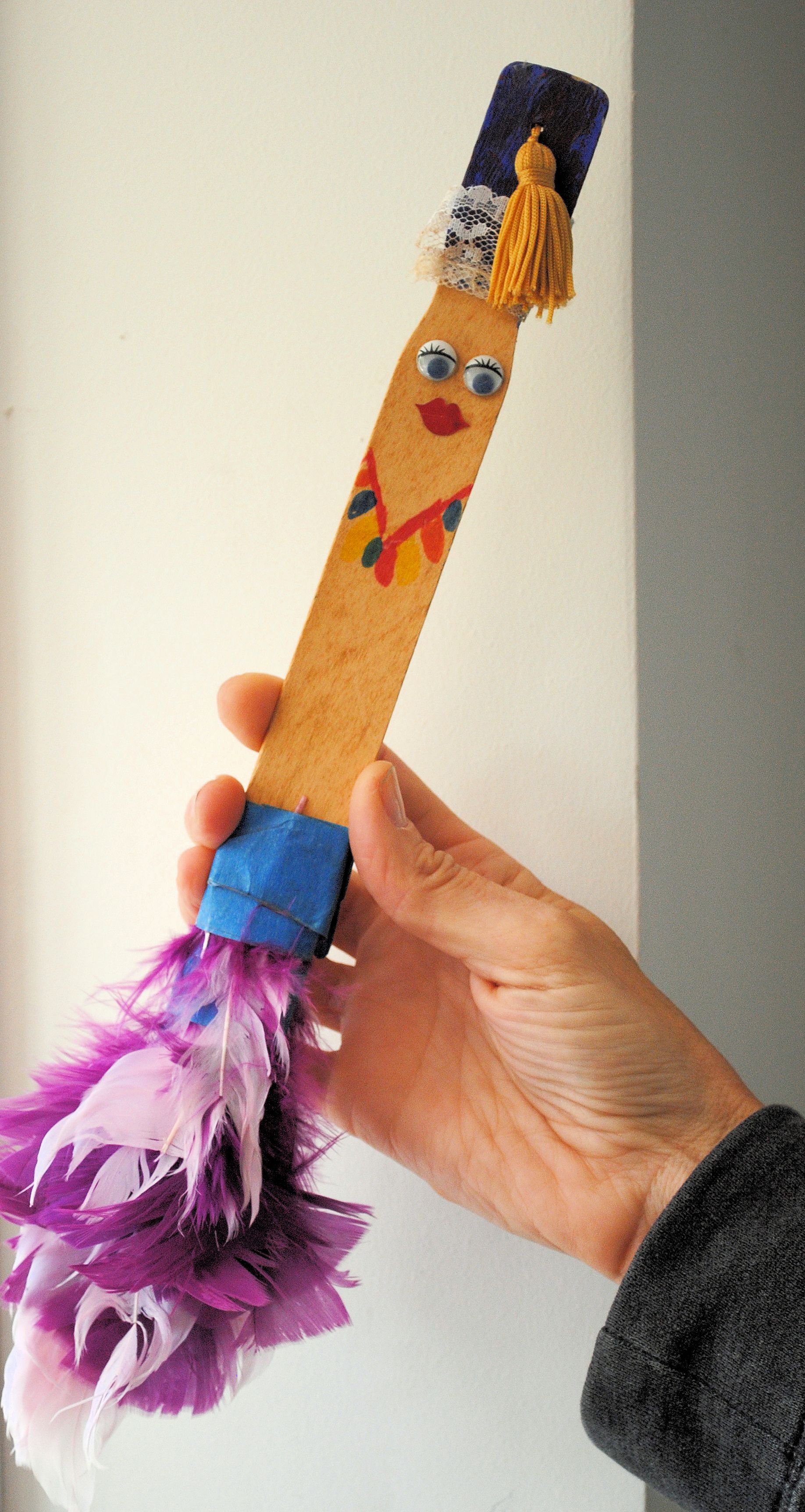
feather duster
The book contains delightful decoration, food and game ideas that the children can choose from and help prepare. Memorable highlights for us were the Fifi the feather duster party favors (made with paint stirrers), the Beast’s chocolate ice cream cake castle (which looked darkly magical as it started to melt), and the dapper and durable green felt Peter Pan party hats (for my oldest daughter’s sixth birthday), a simple craft that even I could make work. The Peter Pan pirate ship trampoline with sails made from white sheets adorned with skull and crossbones were to die for, too.
If our kids were young nowadays we’d no doubt be scouring imaginative websites like Toddler Approved (I love their  Dog Party!), Playful Learning, Tinkerlab and Modern Parents, Messy Kids for party ideas to inspire us and our kids and make beautiful memories.
It’s not about money
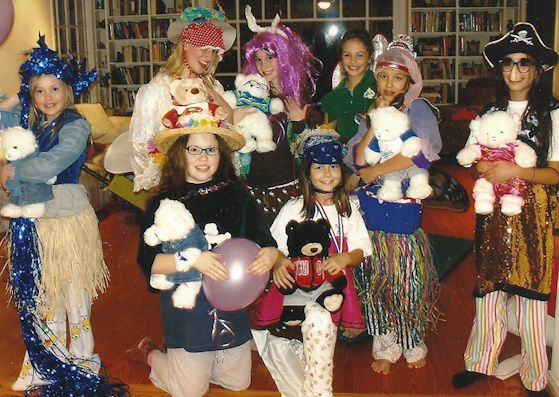
There were parties we spent money on, but looking back, the parties (and aspects of parties) that stand out as memorable favorites cost us very little.  Take the slumber party we had for our middle daughter’s 10th birthday. We took the girls to “Build-a-Bear”, which can be costly, and they certainly enjoyed themselves, but the party really took off when the girls came back to our house and began their spontaneous game of “fashion show” with the large collection of random costumes and accessories we’d amassed over the years. Our older daughter videoed the girls “walking the catwalk” in their outrageous outfits (though it was almost impossible to walk steadily when they were doubled over with laughter), and then later they posed for this photo:
cropped smaller esized party girls
Trust is the ticket to magical surprises
‘Trust’ is my favorite parenting word because of all the magic and joy the simple (though not always easy) practice of letting go has brought to my family over the years.
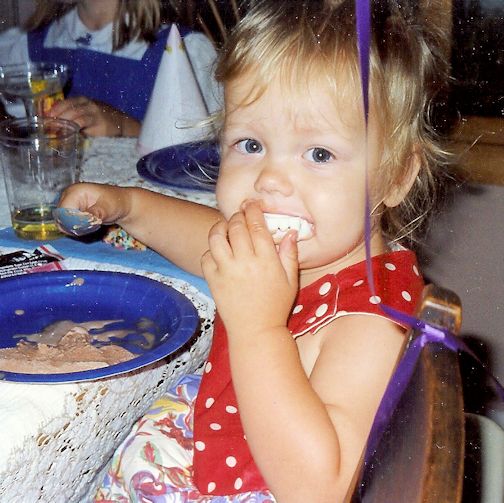
Trusting our first daughter to develop empathy and manners through our modeling (rather than forcing or insisting she share or say “thanks” or “sorry”) led to our big surprise on her 3rd birthday when she thanked each of her guests individually and effusively for the gifts she received.  She also surprised us year after year by always reserving the seat next to hers for her sister who’s four years younger (and is exploring her Beast fangs in the below photo).madeline fangs
Trust in our kids to do it their way has meant we seldom need to entertain. We first realized this when our oldest had her “Beauty and the Beast” party in Kindergarten. The guests had enjoyed their Beast-themed snacks, including breadstick “Lumière” candlesticks with butter “flames”, the marvelous haunted castle cake and also a piñata. (We chose the only one we could find that vaguely fit the theme — a lovely dark haired girl — not foreseeing how wrong it would feel to be pummeling her with a plastic bat!)
After the piñata was cracked, we thought we’d need to keep the party moving by leading some games, but to our surprise, our daughter and her seven guests completely took charge, playing games on the lawn they’d learned in music class at school, which entertained them for the rest of the afternoon. Well, that was easy!
We’ve since been surprised when, for example, a large group of middle school kids chose to frolic in the ocean fully dressed (we didn’t think they’d actually enter the bracing water at the end of October).
And then there was “Rainbow Wars”, the uncomplicated, yet apparently riveting game my son’s friends invented that involved throwing glow stick party favors at each other all evening in our backyard. Who needs adult-led entertainment?
One of the biggest surprises we’ve had has been at the holiday party we’ve hosted for family and neighbors for the last few years. Kids of all ages are in attendance, yet you’d never know it, because they are outdoors playing who-knows-what in the dark all evening. Granted, it doesn’t get much below 40 degrees around here, but that can still be a bit chilly when you’re barefoot, as most of them apparently are.
When children devise the plan, it’s more fun for everyone.
JudeTheMan_(2)

 Please share your stories!

Wednesday, April 9, 2014

Adjusting to a new baby

Ask The Parent Coach: 7 Ways To Help Your Child Adjust To A New Baby

The Huffington Post  |  By Posted:

Adjust To New Sibling
Dear Susan,
My husband and I just had a baby boy, and our 4-year-old daughter is not adjusting well. She was happy that she was finally going to have a brother, but now she shows very little interest in him. She has been having tantrums, and tells me that she hates the new baby. I have reminded her that she wanted to be a big sister -- but it isn't helping. What can I do?
Signed,
Confused Mother of Two

Dear Confused Mother of Two,
You have probably heard this before, but just in case, here is an analogy that may help you understand what your daughter is going through. Imagine your husband coming home one day with another wife, lovingly draping his arm around her while telling you with great enthusiasm that this new wife will only add to the love and joy in your family. Chances are, you wouldn't buy it. That was your husband, and you have no interest in sharing him.
Your newborn -- however precious -- occupies a lot of your time and attention. Right now your daughter is going through a significant loss; she needs time and help to come to terms with the sudden competition she has for access to you. Here's what I suggest.
1. Be willing to hear her unhappy feelings. "I understand it's hard, sweetheart." "You wanted time with Mommy all by yourself." "When the baby is fussy, he makes a lot of noise." Don't sugarcoat how life has changed in your household; if you acknowledge the hard parts, she won't have to bury or repress her frustration, which is what is fueling her misbehavior.
2. Emphasize what hasn't changed. A child's world is full of new experiences; the arrival of a new sibling is one of the biggest ones, but every day, children encounter things they don't understand or have never been through. Read your daughter her favorite book, sing your special song, and try to stick to whatever rituals you can as you navigate your own enormous adjustments (not to mention fatigue!).
3. Don't try to push your daughter to cozy up to her brother. The less insistent you are that she fuss over him or act like a "good big sister," the more room she'll have to naturally fall in love with him.
4. Offer her the chance to be alone with you and her daddy -- together, and one-on-one. Take her for a short walk or an errand without the baby so she remembers that she's still your special girl.
5. Help her discover the benefits of being a big sister. While in theory your daughter might have been excited about the baby, she may find that having a younger sibling isn't turning out to be quite as much fun as she imagined. Avoid telling her she needs to act her age or be a good role model for her little brother. Instead, tell others (within your daughter's earshot) how helpful she was if she carried your diaper bag or handed you the baby powder, and how lucky her brother is to have her in his life.
6. If your daughter has a favorite friend, relative, or grandparent, enlist their support in offering her some extra time or special attention.
7. Encourage her tears. Your daughter may end up having a meltdown over something seemingly minor, like getting a red cup instead of a blue one. Rather than trying to explain why it doesn't matter, use emotionally-charged moments to help her express the big feelings that have been activated by the arrival of her baby brother. Regardless of why she's crying, having the chance to cry -- and be comforted by you -- will help her adjust.
Above all, be patient, and allow your daughter the time and loving support she needs to manage the many emotions that come with adjusting to the change in your family. As she discovers that her feelings can be tenderly accepted and understood, she'll be able to recognize the sweetness and joy that have come with the arrival of her new sibling.
Yours in parenting support,
Susan
Parent Coach, Susan Stiffelman, is a licensed marriage and family therapist and credentialed teacher. She holds a Bachelor of Arts in developmental psychology and a Master of Arts in clinical psychology. Her book, Parenting Without Power Struggles, is available on Amazon. Sign up to get Susan's free parenting newsletter.

Helping Kids Adjust to life with a new baby

Helping Kids Adjust to Life With the New Baby

I’d just landed at LAX and was waiting at the baggage claim carousel when I heard an angry exchange. I turned toward the adjacent carousel and saw a three or four-year-old girl decked out in a colorful traveling ensemble – brightly patterned leggings, a trendy t-shirt and pink plastic movie star sunglasses. She seemed to be fumbling for something in her polka dot backpack while her father glared at her and seethed, “Just be nice. Be nice to your sister!”
Several feet away stood her mother, who also glared as she held baby sister (about 12 months old) in her arms. The girl kept her composure but avoided her parents’ gaze. She seemed alone and vulnerable — a “problem child” estranged from her family.
If this mini-snapshot was typical of her family dynamic, it was hard to fathom this little girl ever feeling anything other than resentment towards her baby sister.
The arrival of a new baby is often the most traumatic event in a young child’s life, and if this transition isn’t handled with sensitivity and empathy, some children will never totally regain their footing. At stake are our child’s healthy relationships with parents and siblings, as well as her sense of security and self-worth.
Here are some key points to keep in mind during this difficult adjustment:
1. Have reasonable expectations
A new baby causes a major shift in the family dynamics. No matter how much the older child may have wished for a baby brother or sister, the reality of this shift in the parents’ attention and affection is felt as a loss. Children often feel grief, sadness and sometimes anger or guilt, but mostly they are fearful of losing their parents’ love. Overwhelmed by this tumultuous blend of emotions, which are nearly impossible for children to understand (much less articulate), they act out their pain through irritating behaviors that are sometimes aggressive. Mood swings can be extreme.
Parents might be shocked to discover an unpleasant side to their child they hadn’t known existed, especially if they expected her to be a loving, adoring and helpful big sister during this adjustment. These behaviors are bound to push parents’ buttons, yet since the child is experiencing an emotional crisis she needs the assurance of her parents’ love and empathy more than ever.
2. Encourage children to express feelings
There are a couple of important ways parents can help children express their feelings in a healthy manner:
a. When children act-out with the baby — kissing or patting the baby too hard or jumping on the bed next to her — after calmly but confidently stating the boundary (“I can’t let you…”), the parent can ask matter-of-factly, “Are you feeling rough toward the baby right now? Are you upset that the baby’s here? Big sisters often feel that way. But I’m going to help you get down from the bed. I’d love for you to sit on my lap or jump on the floor next to me.”
b. Casually bring up the subject of negative feelings as often as possible: “Being a big sister is very hard sometimes. It’s normal to get angry at the baby or at mom or dad, feel sad, worry or just be upset and not know why. If you feel any of those things I want to know. I will always understand, love you and want to help you.”
It may feel counterintuitive to suggest these feelings to your child (won’t this encourage her to feel negatively toward the baby?). The truth is that the more you can openly accept and acknowledge, even welcome your child’s negative thoughts and emotions, the more space you will clear for your children to form a genuinely loving bond with their siblings.
3. But why mention negatives when my child seems fine?
Some children do seem to adapt to life with the new baby peacefully. Why would we project about problems that don’t exist?  It is my view that the children who seem more accepting and tolerant of this huge life change need even more encouragement to express negative feelings than those who overtly struggle. No matter how positive any change is there are also elements of fear and loss. For all of us.  If these feelings aren’t addressed and expressed, they are internalized. You may have a well-behaved child, but chances are good she’s suffering inside.
4. Avoid guilt-inducing comments  
When parents are expecting baby number two, friends and relatives will often comment to the firstborn child, “Oooh, bet you can’t wait to be a big sister!” But by then it’s already begun to dawn on the older child that ‘big sister’ isn’t all it’s cracked up to be.  They’ve sensed that the focus of everyone’s attention has shifted away from them. Their future feels uncertain and it will only get worse. They need someone who understands their pain and can assure them that their mixed feelings (especially the negative ones) are perfectly valid, or they are likely to turn these feelings inward.
5. Don’t judge
Again, this is about adjusting our expectations and understanding that button-pushing behaviors are the manifestation of our child’s pain and confusion. When we label a behavior “not nice”, “mean” or “bad”, children take these judgments personally. It’s not only the behavior that’s bad — they are bad. When the people they trust and need most in the world tell them they are “not nice”, they believe it, and this rejection is profound.
6. Lessen tension by not sweating the small stuff
Second children are born into a much different environment than their big sisters. Having an older sibling is exciting. So as much as possible, let it be. Let it be noisier and more chaotic, and let there be more interruptions to the baby’s playtime. Let big sister take toys away from the baby when they’re “playing together” as long as this is physically safe. Understand that this impulse is powerful and symbolic of the rivalry the older child feels. Most babies don’t mind the toys being removed from them unless their parents do.  In fact, this is the way they “play” with another child. The less you focus on these harmless behaviors, the less compelling it will be for the older child to repeat them.
7. Understand your child’s need for trust and autonomy 
Ask for her help whenever possible, especially regarding the baby’s care. When children’s emotions are out of control, opportunities to feel autonomous have a calming effect. But also don’t be disappointed if your child turns you down, because saying “no” is also a way for her to feel autonomous.
8. One-on-one time
Periods of time alone with your children are a necessity, but for both the baby and the older child it’s about quality, not quantity. Set aside at least 20 minutes a day in which you are wholly present and focused on your older child (which might mean aiming toward giving the baby an earlier bedtime). Then, when you need to focus on the baby and your child struggles, you can calmly acknowledge, “I see how uncomfortable it is for you when I am feeding the baby. That is really hard for you, I know. I’m so looking forward to our time together tonight after the baby goes to bed. Think about what you’d like to do together.”
9. Foster the baby’s independent play
A baby who can self-entertain is even more of a blessing the second time around, because his or her independent play creates opportunities for parents to be available to the older child without the baby always between them. Provide a safe, enclosed play space (a crib or playpen is fine for the first months), so that the baby doesn’t need constant supervision. Your toddler will probably need this boundary, because the impulse to test the parents by bothering the baby can be strong.
10. Respect your children’s continued need for boundaries and calm, helpful parents who are “on their side”.
Although extreme exhaustion or guilt might lead us to ease up on boundaries during this period of transition and emotional turmoil, our children need the love and security of our limits now more than ever. They’ll need us to give them matter-of-fact reminders like, “I don’t want you to touch the baby when you are in a jumpy mood”; choices like, “You can stay next to me quietly while I put the baby to bed, or play in the next room.” Sometimes they’ll need us to follow through by gently but firmly physically containing them or removing them from situations. Most crucially, they’ll need us to intervene way before we lose our temper or think they’re “not nice” and with all the confidence, calmness, patience and empathy we can muster.

For more about new babies and sibling rivalry in general, I appreciate these perspectives:
Siblings Without Rivalry by Adele Faber and Elaine Mazlish (one of my all-time favorite parenting books)
Ask the Parent Coach: 7 Ways to Help Your Child Adjust to a New Baby by Susan Stiffelman
A Call for Sunshine and Enlightened by Nadine Hilmar
Sibling Conflicts by Lisa Sunbury
Dealing With Sibling Aggression by Amanda Morgan

Thursday, March 27, 2014

How to raise a bookworm

8 Tips for Raising Bookworms

A young girl is curled up in an old, over-stuffed armchair, totally absorbed in the pages of a book. A television sits nearby, silent and black with jealousy. In a corner, a computer gathers dust in concert with an abandoned gaming system. No one would guess that this girl lost in the world of Regency England crafted by literary great, Jane Austen, couldn’t read at all until fifth grade and fights against the headaches and blurred vision brought on by severe dyslexia. No one would believe that this beautiful twelve year old preteen who has devoured Little Women, Jane Eyre, and is nearly finished with the entire Anne of Green Gables series was still unable to recognize all the letters of the alphabet in the third grade.
So, with all the barriers to reading this young girl faced and all the preconceived notions of the demise of the book and the rise of the electronic age, why does this child choose a book, an ink and paper relic to some, over the hypnotic allure of technology?
Simple…
Children who love to read…READ! It’s just a simple fact of human nature that we are more inclined to do the things that interest and excite us rather than the things we are forced or obligated to do. So how do we engage our children’s hearts in the wonder of reading instead of just training their minds in its mechanics?
Think of learning to ride a bicycle.
Your dad props you up on a shiny red bicycle, gives you a few pointers and an encouraging smile, then runs alongside you with his hand securely on the back of the bike seat, steadying and supporting you as you fly down the sidewalk with the wind in your hair and a thrilled and slightly terrified grin on your face.
Or.
Your dad sits you down with a diagram of a bicycle and drills you on its parts, making you list them over and over and recite them back to him in alphabetical order.
Which teaching style would result in a bicycle rider rather than just a memorization of bicycle parts? Which scenario would encourage a love of bicycle riding?
quote if children don't love to readWhen it comes to reading, do you want your children to become readers or just learn the mechanics of reading? Do you want them to love to read or just know how? If a love of reading is your goal for your children, here are some ideas to get you started:
1.)    Let them see you reading! Children learn more by watching what we do than by listening to what we say. Seeing your books laying around the house, trying to get your attention while you’re absorbed in an intense scene, giggling when you ‘sneak’ away to the bathroom with a favorite tome, all of these things will have a huge impact on their perception of reading as a desirable activity.
2.)    Read to them from infancy on, and let them in on it! Don’t make reading a one-sided exercise with you doing all the talking. Make reading interactive by letting your little one turn pages (yes, even if they want to go backwards!) and point at the pictures and talk about the binding and maybe even chew on the book a bit (bookworms actually do eat books, after all!)
3.)    Play, play, play! Seriously, stop being so serious! Children learn best through play, so grab some sidewalk chalk and head outside to the best classroom ever invented. Make up your own games or check out Pinterest and just have a blast! If your children associate learning to read with mommy playing abc hopscotch with them or daddy hiding abc eggs in the bushes, you’ve turned what could be a battle into a playground!
4.)     If a child doesn’t love to read, they’re reading the wrong books! Surround them with books of every kind. Fill your home with paperback thrillers and dime-store novels and comic books (yes, comic books!) and nonfiction books on horses and whales and art and music. Creating an atmosphere ripe with knowledge and adventure at your children’s fingertips will go a long way towards making reading an active part of their lives. (And don’t forget the power of the fort! Creating a cozy nook that invites settling in for a reading adventure is really…well, inviting!)
5.)    Oh, the places you’ll go! (A la Dr. Seuss!) Make monthly library ‘dates’ to return books and explore new and exciting genres at no cost to you. While you’re there, check out the library’s calendar of events for author visits and book readings and craft activities and mom’s groups. You’ll be amazed at how much the too often forgotten library system has to offer in most areas!
6.)    Indie bookstores are the bomb-diggity, no joke!  Most cities have one or more independent bookstores struggling to make it through the downturned economy and the advance of the electronic age. These small stores are little niches of wonder just waiting to be discovered, and by supporting them you will not only help keep a local business afloat, but you will also introduce your children to the warmth and beauty of walls lined with books, shopkeepers who can converse about every title like an old friend, and possibly even some local authors that you never even knew existed!
7.)    A lifestyle of reading puts the vast knowledge of the ages into the hands of our children. Exchanging the life-long riches of a love of reading for the temporary value of facts gleaned from required reading lists is a paltry deal, indeed. Encourage reading, yes, but let their hearts, their interests, their imaginations choose their reading material. Whatever momentary facts they need for the next test or quiz can be found just as easily on Google. A passion for reading can only be found in the heart of the child.
8.)   Parenting matters! Parenting choices strongly impact a child’s level of trust and security. A love of learning grows when it isn’t stifled by fear or stress. Parents fostering a healthy attachment are also fostering a love of learning in their children which translates directly into a love of reading!
I love that my older children have already met and fallen in love with my old friends such as Sense & Sensibility, The Great Gatsby, Moby Dick, Of Mice and Men, The Red Badge of Courage, War and Peace, The Hound of the Baskervilles, and so many, many more. And I love that my younger children still have new friends waiting to be discovered between the covers of wonderful, beautiful, ageless books. Happy reading!


Related posts:
25 Must-Have Books for Baby Bookworms
25 Must-Have Books for Toddler Bookworms
25 Must-Have Books for Preschool Bookworms
There is such a rush these days to get children sleeping through the night, weaned off the breast, eating solid foods, potty trained, reading independently, and on and on, that we seem to have lost the ability to simply enjoy life as it happens and let our children do the same. A Return to Childhood

Successful reading means far more than possessing the ability to read. Engaging the hearts of students moves reading success beyond a life skill and turns it into a life style. And graphic novels are too powerful of a tool in our arsenal to be disregarded because of pride or prejudice. Raising Super Readers~The MARVELous Power of Comic Books!
In the world of a child wonders are as simple as sticks and sheets, leaves and books, boxes and giggles, and the promise in a rainy day. The Seven Wonders of the World of Childhood
Think homeschooled children are unsocialized, over-controlled, locked-away-from-the-world misfits? Think again! My Renaissance Girl
Parenting choices strongly impact the level and type of attachment a child develops and, by extension, the development of a love of learning. A love of learning grows when it isn’t stifled by fear or stress or regimented by over-structuring or a focus on achievement or competition. Parents fostering a healthy attachment are thus also fostering a life-long love of learning in their children. Love, Play, Learn!
On a Winnie the Pooh style ‘long explore’ my little Pooh Bear discovered the world in The Many Adventures of My Little Pooh Bear
If you give a toddler a book
It’s never too early!
He’ll climb into your lap
While he’s in your lap
He might lay his head on your chest
When he lays his head on your chest
He’ll hear your heartbeat
When he hears your heartbeat
He’ll probably ask if you can hear… If You Give A Toddler A Book…

Kids don't need snacks in recreational sports

Kids Don’t Need Snacks in Recreational Sports!

By blog team member, Kiran. To learn more about Kiran, check out our team page!

Kids don't need snacks in recreational sports! from 100 Days of #RealFood
Staff Contributor Kiran Dodeja Smith
Eating real food is important to me and just as important for my family. I know firsthand that this is not always easy, and it doesn’t happen overnight. But as parents, I feel that it’s our job to give our kids the knowledge of what healthy actually means—both in and outside the house.

Our First Soccer Experience

Last fall, my 7 year old joined the local soccer league – a very organized one at that. We’re still in the stage of figuring out where our kids’ talents lie, and for this season, it was soccer. One practice a week and one game on weekends…that I could handle. But the snack situation I could not.
The first game rolled around, and each girl was instructed to bring a water bottle. Super, I thought. They absolutely need hydration. The coach had brought a big bag of oranges, cut and ready to be consumed, which the kids ate during the 45 minute game. Awesome! I loved that they had a sweet, nourishing whole food snack and water to nosh on while taking a breather.
But then when they finished the game and were given a bag of Cheez-It’s and a Capri Sun, I was baffled. Um, really? But what was I going to do, be the mean mom who wouldn’t let my daughter take the snack? (I was not the mean mom this time.)
Shortly thereafter I received a sign-up sheet. Apparently this was going to be the norm. Each parent was to sign up to bring cut oranges for one of the games, and on that same day they were responsible for supplying the snack.

Snacks vs. Soccer

My first issue is this. When it comes to recreational sports for kids, they don’t really need a snack afterwards. If they are fed a good, solid breakfast prior to the game and then they hydrate and eat oranges during, do they really need something else right afterwards?
I’ll admit that I don’t have a degree in sports nutrition, so I reached out to an expert on the subject. Nancy Clark is a registered dietitian and best-selling author who is known for her book, Nancy Clark’s Sports Nutrition Guidebook. She concurred saying,
“The determining factor is how hard the kids have played. If they have gone all out and done exhaustive exercise or if they will be playing again in 6-8 hours, they need to rapidly refuel. However if they just played a friendly game of soccer and are hungry afterwards, they can go have lunch. Kids bodies are very good at regulating; they know when they are hungry and know to eat when they are. If you put Cheetos in front of them, they will eat them just because…but they’d probably be fine heading home to have lunch.”
I also have an issue with kids getting unnecessary snacks because, once again, I feel that we are programming our kids to think that you always get something when you do something. In this case, the kids were more excited about the snacks than the actual game. Whatever happened to just being proud of playing and feeling good about what you just did? When did we lose this simplicity?
During our soccer season, these are some of the snacks my daughter received:
  • Cheese-Its and Capri Sun
  • Doritos and Gatorade
  • Cheetos and a juice box
  • Chex Mix and a juice box
  • Potato chips and a Gatorade
  • Pretzels (made from refined white flour) and a Powerade
I have to admit that I had angst for a few weeks before it was my turn. As the soccer team was poisoning (Okay, okay. Maybe that’s a strong word. Brainwashing?) my daughter into thinking she’d have these highly processed snacks, what could I bring that would satisfy on all levels? I opted for squeezable applesauce and whole wheat pretzels. And water. For Pete’s sake, what’s wrong with just some water to drink afterwards??!
I had two non-takers; I’m not going to lie. But most left feeling happy, especially my kids (I had brought extra for my three other children). And me. It was a win, and I’m not talking soccer.
Kids don't need snacks in recreatinal sports! from 100 Days of #RealFood

What Can We Do About It?

I realize that I’m not going to change every sports association out there. Though I’m really, really hopeful (hint, hint) that some of you will read this and take action, I’m sure that snacks of some sort will continue. So I’ve included a list of better choices in case you have to sign up for snack duty for your child’s sports. And note that I realize many organizations probably won’t let you make your own goodies to bring, though how great would that be??
Whole Food Snacks
  • Carrot sticks (in baggies*)
  • Apple slices (in baggies*)
  • Mini apples
  • Whole-wheat pretzels
  • Lara Bars
  • Dried whole grain cereal (such as puffed brown rice or organic corn)
  • Bananas
  • Squeezable applesauces
  • Unsweetened applesauce cups
  • Dried dates (in baggies*)
  • Strawberries (whole with tops cut off, in baggies*)
  • Oranges
  • Bags of popcorn made using The Popcorn Trick
  • Small bag of almonds (Trader Joe’s sells these) – not suitable for those with nut allergies
  • Raisins
For more ideas check out our list of 85 snack ideas!
*A great alternative to regular plastic bags are these bio-degradable monster bags.
I’m not the only one who is fired up about this. Sally from Real Mom Nutrition has a great post that includes all the tools you need to be proactive about being a “snactivist” when it comes to sport snacks. School Bites has another great post on the topic.
Please share your thoughts. Have you encountered this? And if so, how did you handle it?
-
March 7, 2014 update:
-
I am ecstatic to share that I took some of the commenters’ advice. A few of you had suggested not just talking about it, but doing something about it. So I reached out to our local soccer association who was 100% on board with it. They had me put together a letter to go out to all parents regarding the topic, along with suggested snacks (above), though it’s up to the coach to decide whether or not they want to implement a snack rotation. I was sure to suggest oranges and waters for during the game. They also are including this information on their website.
-
To be exact, below was their response:
“Thank you for your passion and efforts. Think this is a big issue and will support you in this.”
Thank you for encouraging me to reach out to them – and now it’s your turn to also do so. Together we can make a difference!!

Snactivism - Soccer Season

Soccer Season is Here. Are You Ready, Snacktivists?

by Sally on March 15, 2013
Right now, in many communities around the country, kids are trying on cleats and shin guards and parents are busting out camp chairs and coolers from storage. Soccer season is upon us. And so are soccer snacks.
If you’re fed up with soccer snacks (or baseball, swimming , or basketball snacks), if you’re done with frosted cupcakes, donuts, cookies, chips, and sugary drinks on the sidelines after games, if you’re ready to make a change on your child’s team, now is the time to act!
Talk to your child’s coach–ideally before the first or second practice but definitely before the first game. Let him or her know about your concerns and ideas. If the coach is open to a healthier snack policy, you’ll want to spread the word and organize right away (or consider eliminating the snack completely. Read “What if Soccer Snacks Just Went Away?“)
Here’s an example of the kind of email you can send. Feel free to cut, paste, edit, and make this your own.
Hi Coach ____,
I wanted to introduce myself. I’m _____’s mom, and we’re all excited about the upcoming season!
I’m writing because I’d like to discuss the topic of team snacks with you. I’m concerned about the junk food I’ve been seeing on the sidelines of kids’ sports, and I’m wondering if you would be open to a fruit-and-water snack policy for our team this season (remember the orange slices we ate on the sidelines when we were kids?). Children don’t need Oreos, cupcakes, Doritos, and sugary punch on Saturday mornings–or in the evening, especially if families are having dinner after the game. One of the reasons we have our kids in sports is to encourage physical activity and good health, and these kinds of snacks derail that goal. I’ve discussed this with other parents on the sidelines, and it seems like many of them would love to see an end to the junk food too.
If you’d like, I can draft an email to parents on the team about the fruit-and-water snack policy. I’m also happy to organize the snack schedule for you. Please let me know your thoughts.
Thank you!
Here are some more tools to help you:
Sample Team Letter: Explaining the fruit-and-water policy and providing examples of kinds of fruit to bring.
FAQ: In case you’re met with questions.
Slideshow: Photos I took on the soccer fields of snacks (from Krispy Kremes to bananas) set to music, plus powerful statistics that will hopefully get coaches and parents aware and on board.
I’m also here to help you in any way I can. So feel free to stop by my Facebook page and leave me a message–or post a success story!
Make THIS the season you push for real change. Good luck!
Related Posts Plugin for WordPress, Blogger...
 1018 16 224
{ 4 comments… read them below or add one }
Stacy@School-Bites.com March 18, 2013 at 1:46 pm
Sally — I’m wearing my Snacktivist badge and am ready to get to work on the soccer and t-ball snacks! I’m thinking of contacting the organizations involved and ask them to provide info on healthy snacks to all the coaches. I’ll let you know what kind of response I get.
Erin March 24, 2013 at 4:25 pm
Biggest kitchen cleaning challenge? The range hood & backsplash!
Angela April 21, 2013 at 5:04 pm
Score one for the food-obsessed mom!! I have two out of three spring sports teams agreeing to NO snacks after baseball games! The third decided to just do a few games over the season (kindergarten softball team), but it’s better than every night! I tried to do “healthy snacks” last year, but that just didn’t work (my idea of healthy is way different than some other families’). This year I asked all the coaches to just let kids bring their own snack, that way WE can decide for our own families what is a good snack after a baseball game.
Sally April 21, 2013 at 7:30 pm
Bravo, Angela!! That is terrific news, and thank you for sharing it with me–and making GREAT change for your child and so many other children too.

Snacktivism

Soccer Snacktivism Handbook

by Sally on August 28, 2012
Soccer season has officially begun–and if you’re fed up with junk food snacks on the sidelines and want to take Snacktivism to your child’s team, I’d love to help you!
Below are four resources for you to use:
  • A sample coach letter
  • A sample team letter
  • FAQ to answer questions from coaches or parents
Please feel free to use these resources for your own teams. You can also download the letter and FAQ by clicking on the title.

1. Sample Coach Letter

Hi Coach ____,
I wanted to introduce myself. I’m _____’s mom, and we’re all excited about the upcoming season!
I’m writing because I’d like to discuss the topic of team snacks with you. I’m wondering if you would be open to either eliminating the team snack entirely or creating a fresh-fruit-and-water snack policy for our team this season (remember the orange slices we ate on the sidelines when we were kids?). I’m concerned about the junk food I’ve been seeing on the sidelines of kids’ sports. One of the reasons we have our kids in sports is to encourage physical activity and good health, and these kinds of snacks derail that goal. I’ve discussed this with other parents, and it seems like many of them would love to see an end to the junk food too. I would love to hear your thoughts on this. And if you decide to go with fresh fruit, I’m also happy to organize a snack schedule for you. 
Thank you!

2. Sample Team Letter

 Hi everyone,
The coach has asked me to organize the snack schedule this season, and we have a great idea: Remember the orange slices we all ate on the sidelines when we were kids? Let’s bring back them back! We want our kids to play sports so they move their bodies, burn off energy, and be strong–so let’s give them a snack that keeps them healthy.
Here’s what the coach and I are asking of you: Every child brings a water bottle, and parents take turns bringing fresh fruit for after the game. This fruit-only snack policy benefits everyone because there’s less cost (when it’s your turn to bring snacks, you are only in charge of bringing fruit, no drinks) and less mess (no packages to pick up, no juice pouches in landfills). It also means they’ll be hungry for lunch or dinner afterward.
Feel free to bring any fresh fruit you’d like (please wash it so it’s ready to grab and eat). You can also bring small boxes of raisins (but please do not bring fruit roll-ups or fruit snacks, since those are mostly added sugar).
Some ideas: Orange slices, bananas, apples, peaches, pears, watermelon slices, grapes (cut into small bunches), berries or melon balls/chunks in paper cups.
If you don’t think your child will eat fruit or feel he needs something more after the game, please bring your own snack and give it to your child when you’re away from the field.
Remember to bring a full bottle of water to each game for your child. Please do not bring flavored water pouches or juice boxes for players. The best thing for kids to drink before, during, and after sports is regular water, according to the American Academy of Pediatrics. The electrolytes lost during sweat can easily be replaced at their next meal.
With this snack policy, our team can set an example for the whole league. We all care about our kids and want the best for them, so let’s do something great for their health!
Please let me know if you have any questions or concerns about this snack policy.
Thank you!
**********************************************************************

3. Soccer Snack Policy FAQ

Why fruit?
Fresh fruit has a little bit of carbohydrates for energy and lots of water for hydration. And kids simply need more of it: 75% of 6-11 year olds don’t get enough fruit. And on any given day, 25% of toddlers and preschoolers don’t eat a single bite of it.
What if I don’t have time to wash and cut up fruit?
Grab a bunch of bananas. It takes the same amount of time to grab those as it does to grab a few boxes of gummy fruit snacks. They’re cheaper, too.
What about sports drinks? Don’t kids need those after exercising?
Actually, no. Sports drinks are designed for endurance athletes. The American Academy of Pediatrics says that most kids need only water to hydrate during and after sports. Those drinks just add a lot of extra calories (plus sugar and dyes). Kids can replenish any lost electrolytes at the next meal or snack.
But our kids are burning off a ton of calories on the soccer field, aren’t they?
Kids burn off far fewer calories in team sports than we think. According to a recent study from the University of Minnesota School of Public Health, the average 8 year old burns only 150 calories in an hour of sports—but the typical after-game snack has 300- 500 calories.
Don’t kids deserve a treat every once in a while?
The problem is that kids get treats at every turn: School, daycare, preschool, parties. Treats are not the exception anymore; they’ve become the rule. Toddlers and preschoolers get 16 teaspoons of added sugar every day, and 6-11 year olds get 24 teaspoons. One in three children is overweight or obese today. (That’s triple the rate from when we were kids.)
My child won’t eat fruit. Why don’t’ you just bring some fruit for your kid?
The simple fact is that most kids are not going to choose fruit over a Fruit Roll-Up if given the chance. And don’t underestimate your child: You’d be surprised at the effect that positive peer pressure has on kids. They’re more likely to eat something new or different if they see their friends chowing down on it too. But if you’d prefer that your child have something else, give it to them in the car on the way home.
Why do we even need snacks?
We don’t. If all of the parents are in favor of eliminating snacks, let’s go for it. Less hassle for everyone.